 Production notes
Empty space is about to be regulated — and it was already costing you freight
Among the 2030 measures in the EU packaging regulation is a limit on empty space in packaging. Brands tend to read that as a future compliance problem. It is worth reading it instead as permission to fix something that is already on your P&L.
The arithmetic nobody runs
Ocean freight is priced by volume far more than by weight for packaging. A gift box with 30% void ships 30% air across eight thousand miles, then ships that same air again in the outbound e-commerce carton. Reducing the internal void by even 15–20 mm per dimension frequently moves a programme up a pallet configuration and changes how many units fit a container.
Where the void usually hides
- Generic insert depth. Inserts are often specified to a round number rather than to the product. Moulding or die-cutting to the actual profile recovers 5–15 mm.
- Lid clearance on rigid boxes. A lid-and-base with 6 mm of clearance where 3 mm works adds up across a shipment.
- Shipper sized to the old carton. When the primary pack shrinks, the outer often does not follow. Re-run the shipper every time the carton changes.
- Void fill compensating for a wrong-sized box. If you are buying paper void fill in volume, the box is the problem.
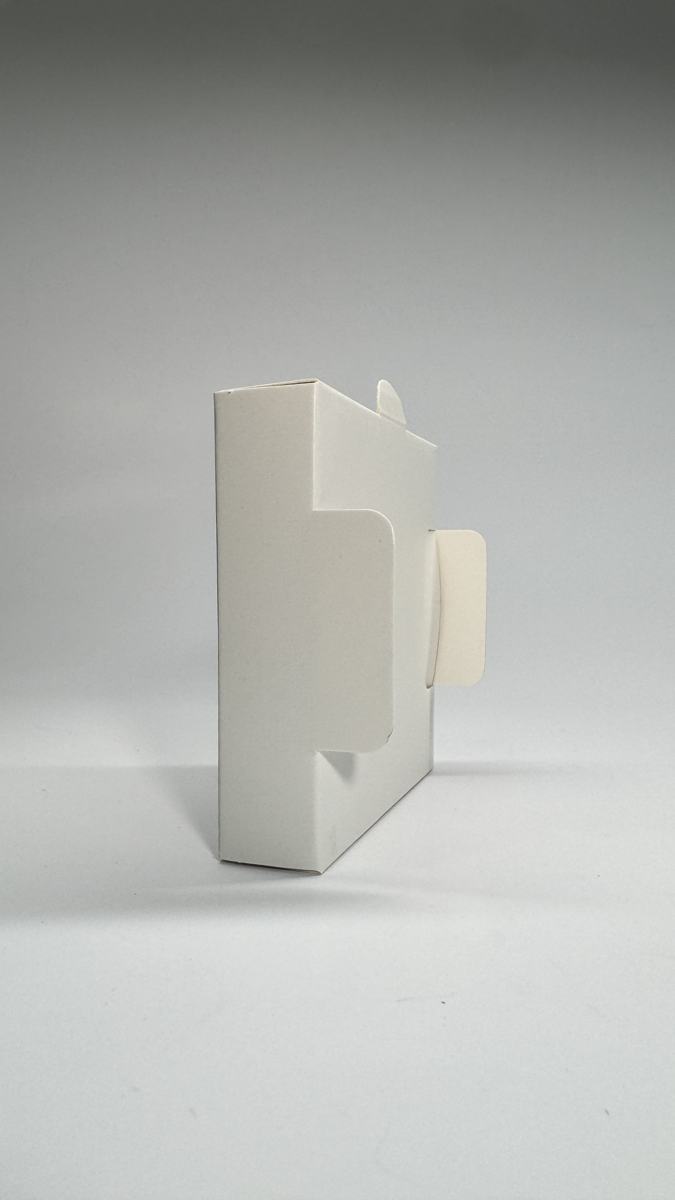
Send us the product, not just the current box. We measure it, redraw the dieline to the real profile, cut a white sample and quote both the new pack and the change in units per container so you can see the freight effect before deciding.
Do it once, on your own schedule
The 2030 date sounds distant, but tooling, sampling and a retail-side artwork approval cycle routinely take six to nine months. Programmes that start right-sizing in 2027 do it once, deliberately, with the freight saving banked for three years. Programmes that start in 2029 do it under deadline and pay for the rush.